“Time passes not, but in it passes the existence of the changeable.”
Immanuel Kant, The Critique of Pure Reason
October is here and I am not sure where September went. It seems as we get older the months and years go faster and faster, and yet the days feel longer. I am consistently exhausted and stretched, and I am not sure whether that is because I am living well and being productive, or because I am hurrying and hurrying and trying to fit everything in. I think the reason it is so hard for any of us to slow down and enjoy life is because we constantly have a vision of what we are missing scrolling in front of us. We never give ourselves the time to meditate on and enjoy our passions and joys without wondering whether we are doing it the right way or getting the most out of it or spending the right amount of money on it. I think this is obvious to us. We all know we are hurrying, which exposes the fallacy that enlightenment is all it takes to help a person change their ways. The alcoholic is usually the one most aware of how they are ruining their own life. How to change? I can only speak for myself, but finding excuses to leave my phone in the car or in the couch and forget about it has been a good step. Just not having it in my pocket or right next to me or even in the same room helps a lot. But really, just discipline, because I still need to use the computer every day and the web browser is right there. Browsing guitar pedals/amps on the internet can be just as harmful because it wastes time and keeps me from my real guitar, to say nothing of emails news and messages and Substack and Medium etc. My mind needs time and space disconnected from it all in order to be able to breathe. It is amazing how hard it can be to do nothing.
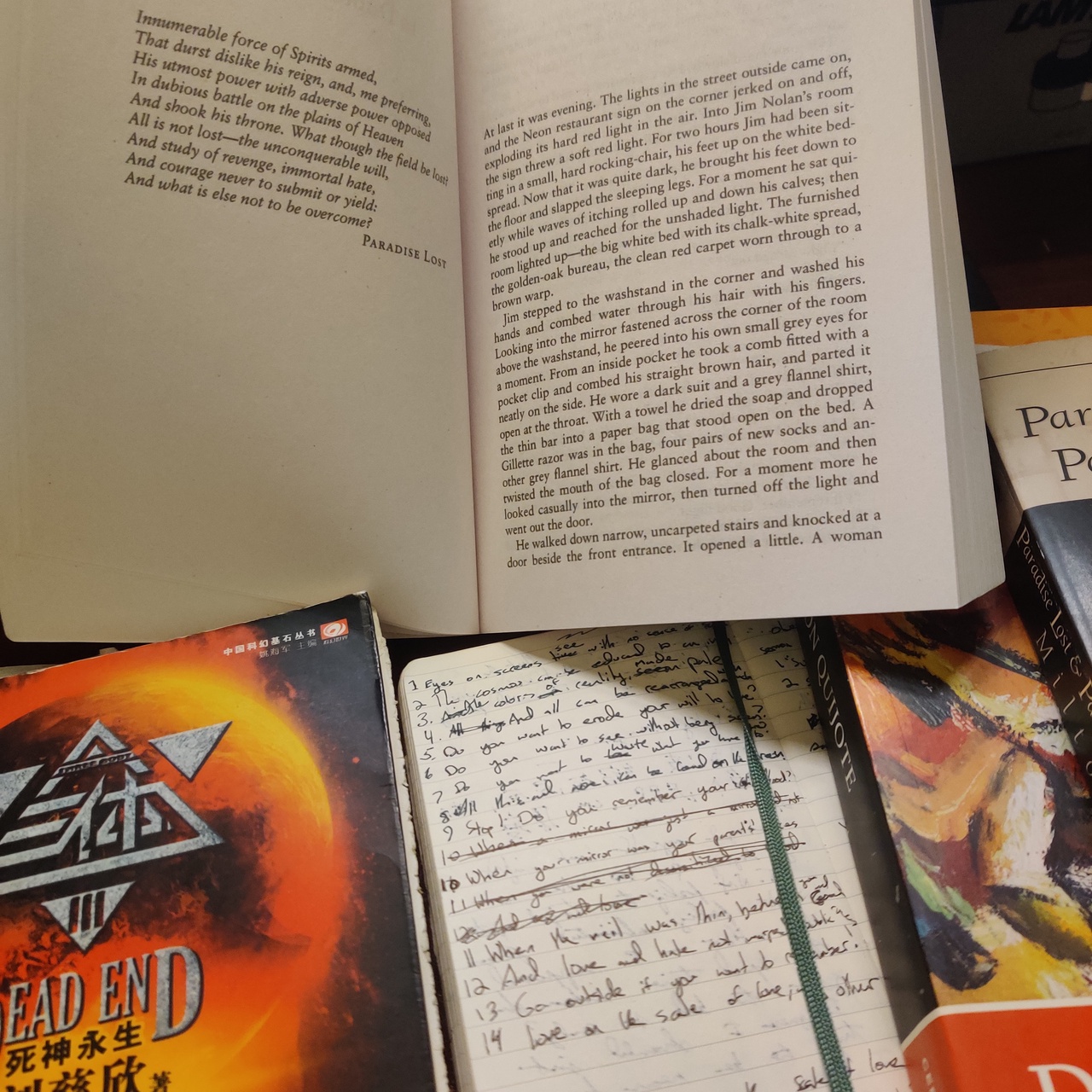
“At last it was evening. The lights in the street outside came on, and the Neon restaurant sign on the corner jerked on and off, exploding its hard red light in the air. Into Jim Nolan’s room the sign threw a soft red light.”
— John Steinbeck, In Dubious Battle
This is good prose, and it was a beautiful reminder of why I love John Steinbeck. He was an excellent writer dedicated to his craft, no matter how controversial his stories or opinions. I really needed to come back to good prose, and I have not been disappointed by In Dubious Battle. It is a good book for starting a new job (haha if you’ve read it). Speaking of which I am somewhat drained while I write this. It is a good job, but there is definitely extra stress when you have to meet new people and go to a new place. And yet every year is new, so experience can sometimes provide a false sense of security. Kids grow, people move, time rushes.
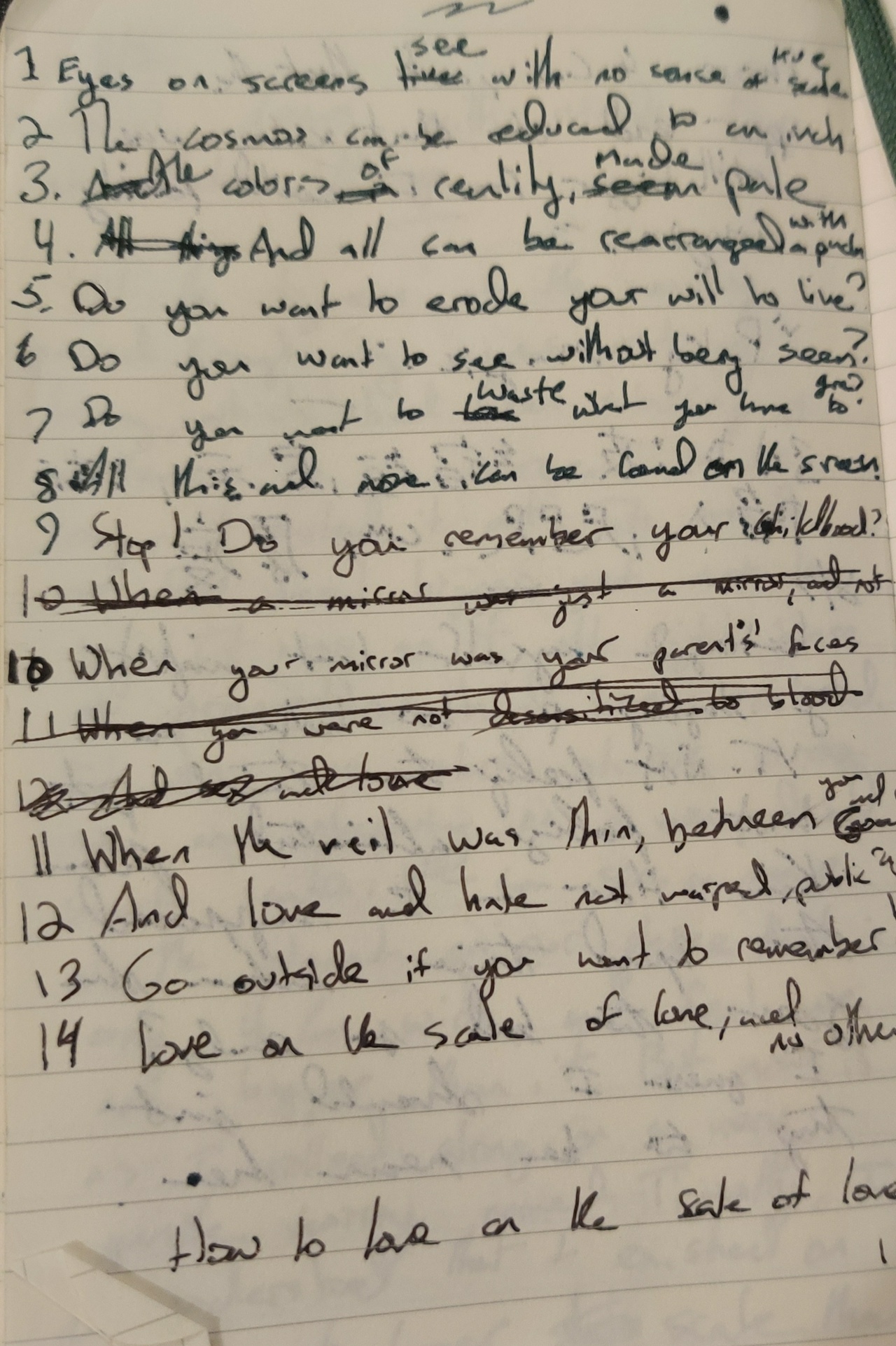
Eyes on screens see with no sense of true scale,
The cosmos can be reduced to an inch,
The colors of reality made pale,
And all can be rearranged with a pinch.
Do you want to erode your will to live?
Do you want to see without being seen?
Do you want to waste what you have to give?
All this and more can be found on the screen.
Stop! Do you remember your childhood?
When your mirror was your parents' faces,
When the veil was thin, between you and Good,
And love and hate not warped, public races?
Go outside if you want to remember.
Love on the scale of love, and no other.
“So deeply inherent is it in this life of ours that men have to suffer for each other’s sins, so inevitably diffusive is human suffering, that even justice makes its victims, and we can conceive no retribution that does not spread beyond its mark in pulsations of unmerited pain.”
— George Eliot, The Mill on the Floss, Chapter 7
“Lawful mercy is nothing kin to foul redemption.”
— Shakespeare, Measure for Measure
Well the last month of summer is coming to a close and we have some large life changes on the horizon. I have always been somewhat calm in periods of transition, but I have begun to wonder whether a good deal of that calmness came from naivety. Now I can only think of what it will mean for my kids and our family and how on earth we will afford a house someday. And yet, when I survey my life, I see so much richness to be thankful for. My family is beautiful and our life is not easy but comfortable and meaningful.
I have also been thinking on mercy and justice, and cannot help but observe that we seem to have forgotten the lessons of history. I cannot help but think with some fear, that the violence wrought by the Trump administration will come back to harm us. Foreign aid is not only charity, it is also good policy. If we sow seeds of hate at home and abroad we should not be surprised when those seeds grow and attempt to choke us somehow. This is why justice and mercy must be mentioned in the same sentence. The justice we need is not merely concerned with “fairness,” but with intentional and proactive steps that not only punish wrongdoing, but strive to build a better future.
Two passages have been haunting me as a writer and a musician. The first is Rainer Maria Rilke’s reference to the “half-artistic” professions in his Letters To a Young Poet. Here is the full quotation:
“Art too is just a way of living, and however one lives, one can, without knowing, prepare for it; in everything real one is closer to it, more its neighbor, than in the unreal half-artistic professions, which, while they pretend to be close to art, in practice deny and attack the existence of all art —as, for example, all of journalism does and almost all criticism and three quarters of what is called (and wants to be called) literature.” (Last paragraph of letter X).
Depending on your profession you might be incensed or traumatized by this sentence. I will not comment on the censure of journalism and almost all of criticism because I do not have Rilke’s certainty. One could accuse him of arrogance, but I do think he is hitting on a truth, which is the human propensity for making ends of our means. Good reporting on current events serves a valuable end for democracy, but it is not meant to be art. Good literary criticism can help us understand great works and what they mean to us, but the criticism itself would not exist without the art. As a writer and podcast producer who puts work online, I would also add podcasting and content creation and cultural criticism to the list of unreal half-artistic professions. They may serve a good purpose, but they are not a worthy end in themselves, and they can easily eclipse art itself. In my own life I have noticed that I often use the busywork of podcast editing or post publishing to avoid the creation of real art (such as my novels or songwriting). Rilke’s words haunt me in those moments.
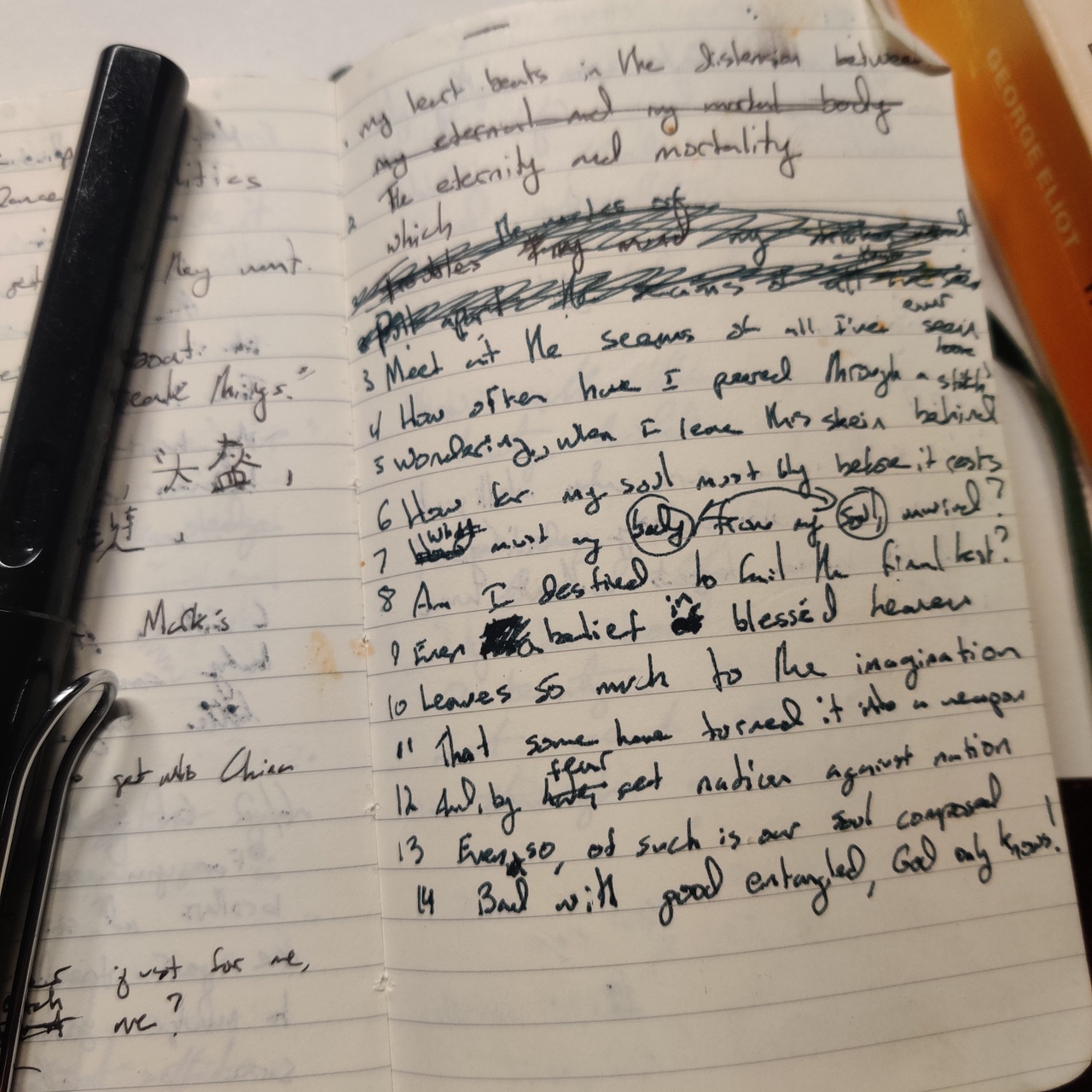
My heart beats in the distension between
Eternity and mortality which
Meet at the seams of all I've ever seen.
How often have I peered through a loose stitch,
Wondering, when I leave this skein behind,
How far my soul must fly before it rests.
Why must my soul, from my body, unwind?
Am I destined to fail the final test?
Even belief in a blessèd heaven
Leaves so much to the imagination
That some have turned it into a weapon
And, by fear, set nation against nation.
Even so, of such is our soul composed,
Bad with good entangled, God only knows!
“Our haste from hence is of so quick condition
That it prefers itself and leaves unquestioned
Matters of needful value.”
— Shakespeare, Measure for Measure 1.1
This is my last summer as a “stay at home Dad.” I ought to reflect on the time I have spent caring for my children (which is really just the beginning of my parenting journey). And so I have; I see that 'reflecting on the value of' is a meaningless phrase that dodges the real question—because we will never know the true value of our life decisions—not unless we are granted Divine Insight. There are a thousand hidden variables that we will never see, and many thousands of ripples more that escape the meaning of 'variables.' How can I calculate the worth of seeing my baby boy smile just for me? Or snuggling with my girl when I read her books every day? This is the problem with a culture so focused on screen appearances and data driven decisions. We can do this with anything, even reading; one can post quotes on social media, but one of the great joys of reading is not finding quotes, it is experiencing the culmination of a thought or a plot in context. It is the sort of joy that cannot be posted online because no one wants to copy & paste three chapters and an explainer (and even if you did post it, it would suck the exclusiveness out of it). Sociology and science are useful tools that can help us understand ourselves and the world, but they were never meant to replace our hearts. Do I really need a study that tells me about the positive outcomes for children who have active and involved fathers? And even if I did, and I found that study, I would still be plagued by a nagging doubt that I was not that father in that study. Science is maddeningly specific, so we must be extremely careful when we apply it to our lives. Real scientists know this, which is why they speak in experimental terms. Most of us are not real scientists, so we misuse it and doubt all our assumptions unless we have a verified dataset with a regression.
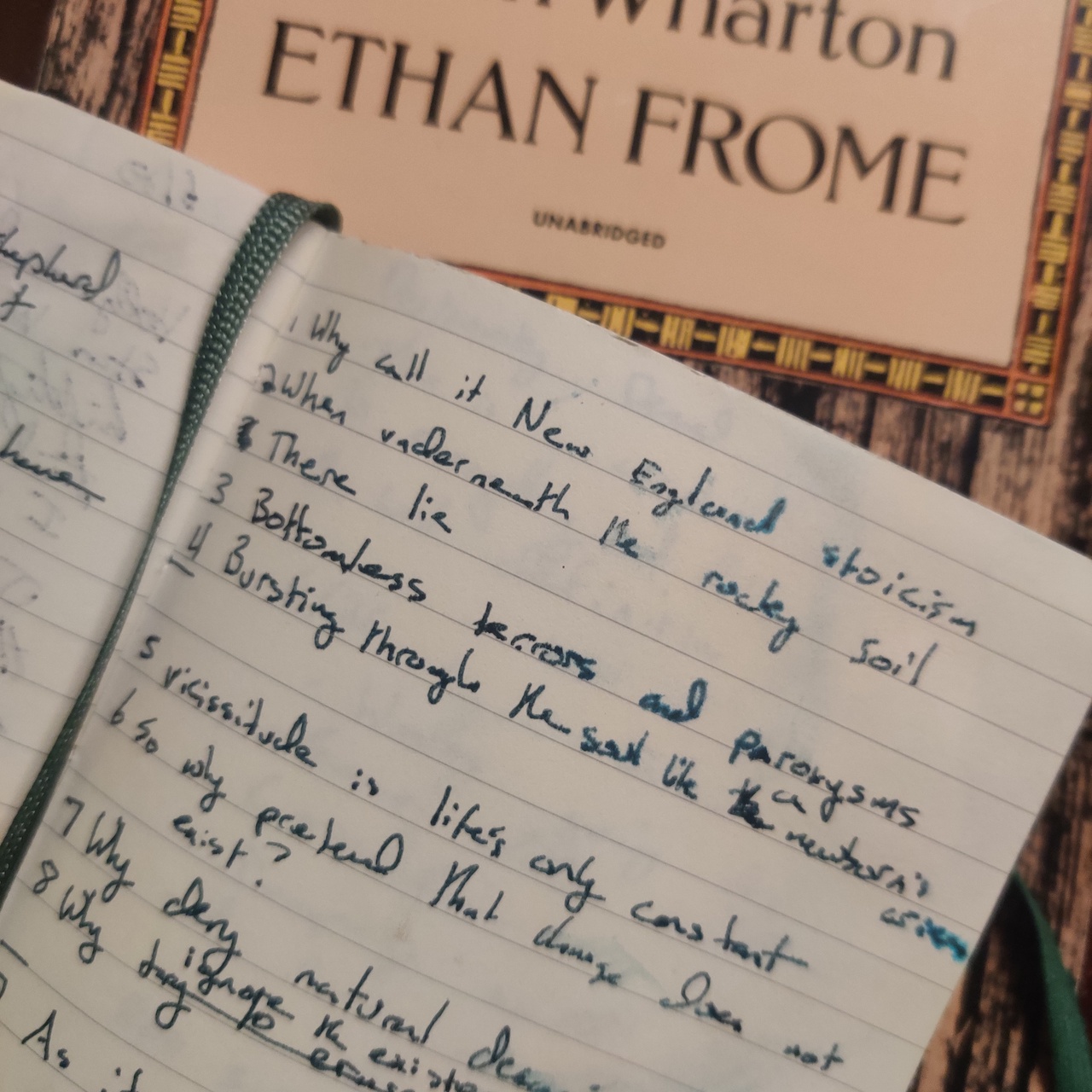
Why call it New England Stoicism,
When underneath the rocky soil, there lie
Bottomless terrors and paroxysms,
Bursting through the soul like a newborn's cries?
Vicissitude is life's only constant.
So why pretend that change does not exist?
Why deny natural decay's portents?
Why ignore the existence of death's list?
As if your old house were Buckingham Palace?
And its unused china something precious?
Preserving only what you miss, will miss
Those moments in life that are most precious,
For which we will be judged at heaven's gate.
Change must be allowed to change; too late!
To be no more; sad cure; for who would lose
Though full of pain, this intellectual being,
Those thoughts that wander through eternity?
Milton, Paradise Lost, II.145-50
We are finally at the end of the school year and I feel more like a defeated runner dragging themselves across the finish line than a triumphant victor. My emotional stamina, whether depleted by vice or by virtue, has been in question for some time now. But as we look towards the summer I am hopeful. There are good things in the future, and I am glad that I serve a good God, who wants to bring Love and Justice and Goodness to the world, in spite of our failings. And I am very glad that He does not value us based on money or status or achievement. I have been brought face to face with my pessimism and pride, and it is painful; like losing a layer of skin. I am going to try to change. And remember that art is fun.
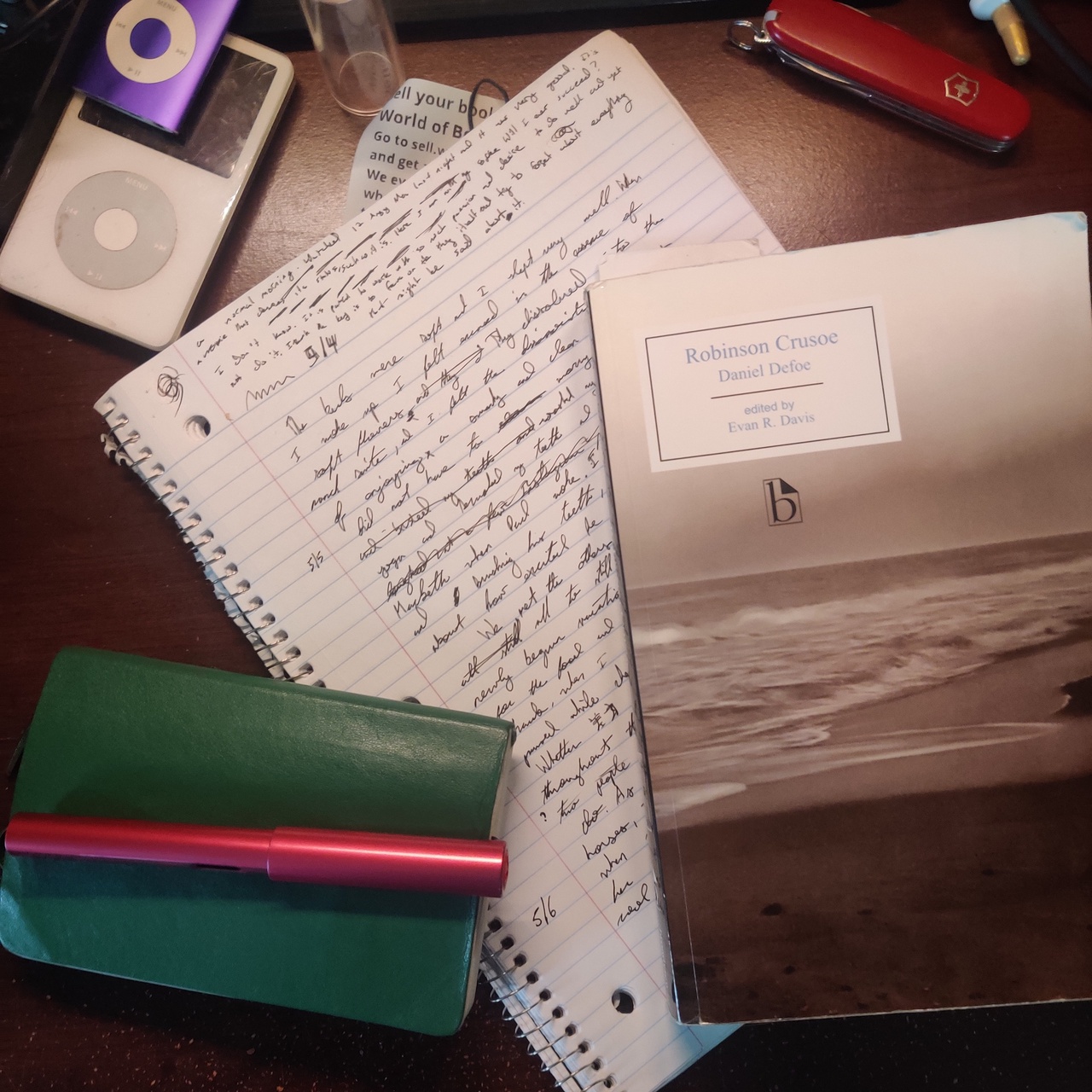
“So little do we see before us in the World, and so much reason have we to depend cheerfully upon the great Maker of the World, that he does not leave his Creatures so absolutely destitute, but that in the worst Circumstances they have always something to be thankful for, and sometimes are nearer their Deliverance than they imagine; nay, are even brought to their Deliverance by the Means by which they seem to be brought to their Destruction.”
— From Robinson Crusoe by Daniel Defoe (p259).
When I think about my recent creative output I get the same sick feeling in my stomach I used to get when I showed up to class without doing my homework. The months have gone so quickly, and my emotions have been so up and down, that I haven't been able to maintain any consistent output. My mind wants to turn to the worst habits, and I feel very distracted. We are not going through a crisis or anything like that, but we're just tired. I am ready for the school year to be over. At the very least, I can say that I did some things this past month, and I do consistently* play guitar and read and study my languages. I think discipline consists much more in the little decisions that we must make over and over every single day, than in the resolutions we make a few times a year.