A Divided Case
Reading and Writing with Jane Austen in Northanger Abbey
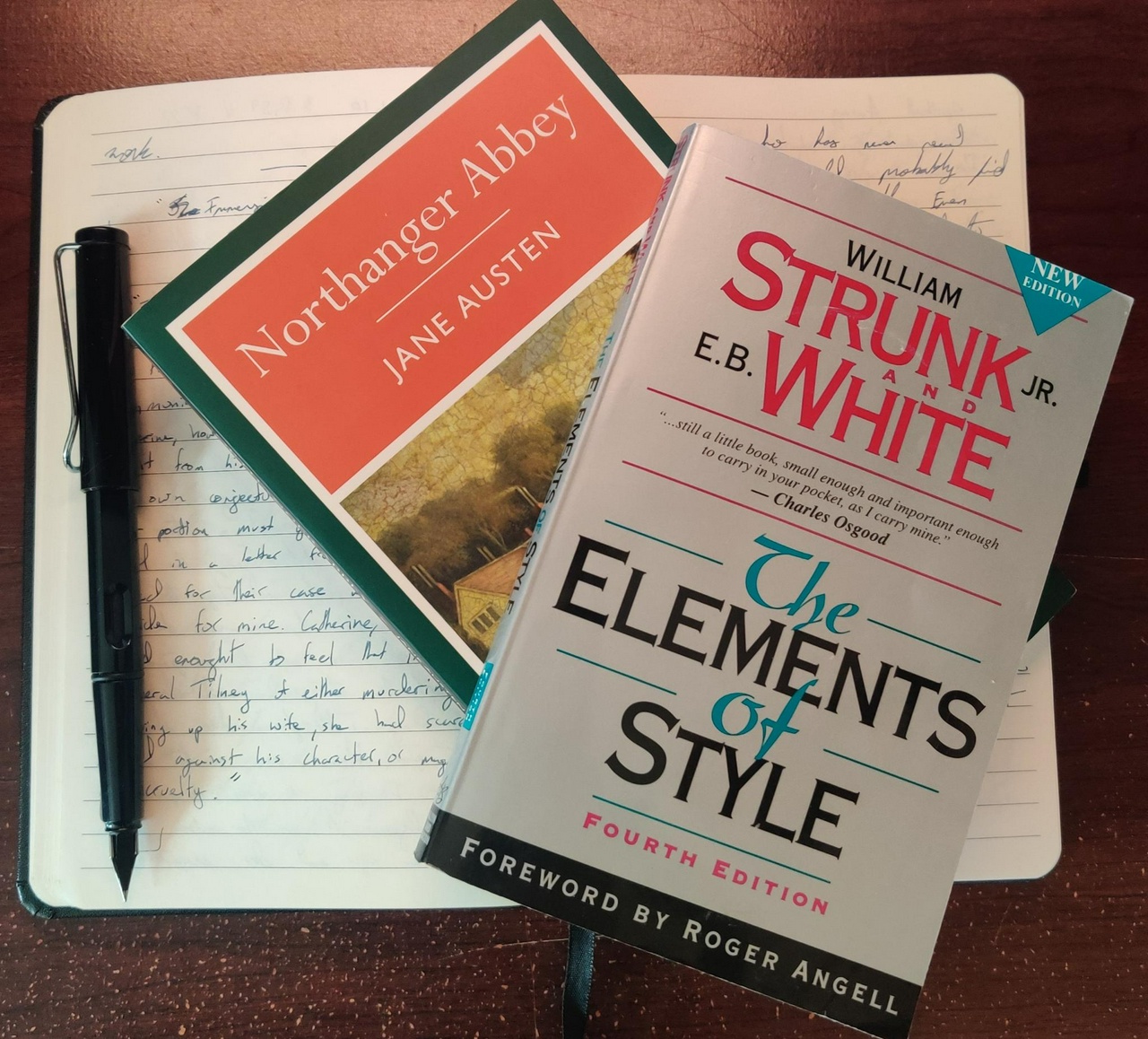
In Northanger Abbey by Jane Austen, after a rich general maltreats the heroine by sending her away from the abbey without ceremony or explanation — the titular abbey at which she had just spent a delightful few weeks with his daughter and son (with whom she was in love) — Jane Austen gives a somewhat brief summary of why the general reversed his behavior towards her and acted so strangely (he found out she wasn't rich and that her connections were not as illustrious as he had assumed). Austen then follows that summary with this paragraph:
“I leave it to my reader's sagacity to determine how much of all this it was possible for Henry [the heroine's lover] to communicate at this time to Catherine, how much of it he could have learnt from his father, in what points his own conjectures might assist him, and what portion must remain to be told in a letter from James [the heroine's brother]. I have divided for their case what they must divide for mine. Catherine, at any rate, heard enough to feel that in suspecting General Tilney of either murdering or shutting up his wife, she had scarcely sinned against his character, or magnified his cruelty.”
(Austen, 215)
This is not an easy paragraph. I had to pause and think it over for some minutes, especially the line, “I have divided for their case what they must divide for mine.” The more I thought about it, however, the more I was delighted and immersed by the way Austen breaks the fourth wall and invites the reader into the act of imagination. It is immersive because she invites the reader to use the same sort of imagination that a writer uses when imagining a story. “I have divided for their case what they must divide for mine,” she says. Meaning that we must imagine for ourselves the various conversations and snippets of letters that would allow Catherine to piece together everything that Austen has just related about the General's behavior and character.